



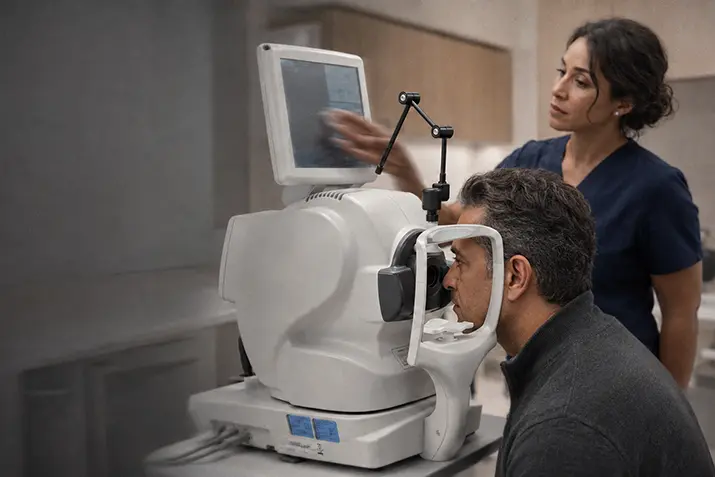
It sounds like something out of science fiction: a 30-second look into a small scanner, and suddenly your doctor knows how your kidneys are holding up. But this isn’t fiction, it’s a growing area of preventive health, and it’s changing how early kidney risk gets caught.
Here’s what’s actually going on, and why it matters more than you might think.
Your Eyes Are Windows Into More Than Just Vision
Most people think of eye exams as being about one thing: eyesight. But the retina is lined with tiny blood vessels that are remarkably easy to observe. And because those vessels respond to the same stressors affecting blood vessels throughout your body, they can reveal a surprising amount about your overall vascular health.
That includes your kidneys. The kidneys rely on an extensive network of small blood vessels to filter waste from your blood, and early kidney stress often shows up as microvascular changes, the same kind of changes that can sometimes be picked up by looking closely at the retina.
That’s the idea behind Reti-CKD, a retinal scan designed to flag early signs of kidney risk before symptoms ever appear.
Why Catching This Early Actually Matters
Kidney disease has a frustrating reputation in medicine: it’s often called a “silent” condition because by the time symptoms show up- fatigue, swelling, changes in urination – a significant amount of kidney function may already be affected.
This is exactly why early detection matters so much, especially for certain groups:
- People with diabetes or prediabetes, since elevated blood sugar over time is one of the leading contributors to kidney stress
- Anyone working on weight loss, since metabolic health and kidney health are closely connected
- People going through preventive health check-ups, who want a fuller picture of their health without adding more blood draws or lab visits
For these groups, a scan that can flag early risk offers a real head start.
How the Scan Actually Works
Here’s the part that tends to surprise people: there’s no needle, no blood sample, and no lab turnaround involved. You simply look into a small scanner for less than 30 seconds, and the retinal image is analyzed right there in the room.
Because it’s non-invasive and quick, it fits naturally into a regular check-up. It’s designed to be one more layer of insight, not an inconvenience.
What Makes This Approach Different
Traditional kidney screening usually leans on blood or urine tests, which are effective but only capture a single moment in time. A retinal scan works differently. It offers a quick window into the ongoing condition of your smallest blood vessels, which can shift gradually as kidney stress builds.
That doesn’t mean it replaces lab work. Instead, it adds a complementary layer of insight, one that’s fast enough to include at nearly every visit.
The Bigger Picture
Preventive health works best when it’s easy enough that people actually follow through. A 30-second retinal scan is about as simple as it gets, which is exactly why it’s becoming part of routine visits for patients managing diabetes, prediabetes, weight loss goals, or simply looking to stay ahead of their health.
Curious what your own scan might reveal? Ask about Reti-CKD at your next visit, it takes less time than it does to read this sentence twice.