

Heart Health
Cardiology Clinic in Dubai
Heart Health
Cardiology Clinic in Dubai
Heart Health
Cardiology Clinic in Dubai
Heart Health
Cardiology Clinic in Dubai
What we treat
What we treat
When should you see a cardiologist?
When should you see a cardiologist?
Some signs are obvious. Others show up quietly, long before anything feels wrong.
See a cardiologist if you're experiencing:
See a cardiologist if you're experiencing:
Chest pain or pressure
Breathlessness
An irregular or racing heartbeat
Fainting or severe dizziness
Swelling in your ankles
Even without symptoms, it's worth a check if you have:
Even without symptoms, it's worth a check if you have:
High blood pressure
Diabetes
High cholesterol
A family history of early heart disease
If any of this sounds familiar, it's worth a conversation.
If any of this sounds familiar, it's worth a conversation.
Comprehensive cardiac assessment
Comprehensive cardiac assessment

Diastolic stress test and stress echocardiogram
Advanced assessment of cardiac function under stress to rule out heart failure
Diastolic stress test and stress echocardiogram
Advanced assessment of cardiac function under stress to rule out heart failure
Diastolic stress test and stress echocardiogram
Advanced assessment of cardiac function under stress to rule out heart failure
Advanced echocardiography with strain imaging
Cutting-edge imaging technology for a more accurate assessment of myocardial function
Advanced echocardiography with strain imaging
Cutting-edge imaging technology for a more accurate assessment of myocardial function
Advanced echocardiography with strain imaging
Cutting-edge imaging technology for a more accurate assessment of myocardial function
Vascular ultrasound (CIMT)
Carotid Intima-Media Thickness (CIMT) testing for early detection of subclinical atherosclerosis
Vascular ultrasound (CIMT)
Carotid Intima-Media Thickness (CIMT) testing for early detection of subclinical atherosclerosis
Vascular ultrasound (CIMT)
Carotid Intima-Media Thickness (CIMT) testing for early detection of subclinical atherosclerosis
EKG and holter monitoring
Wireless patch technology for continuous heart rhythm monitoring, with extended recording up to 14 days
EKG and holter monitoring
Wireless patch technology for continuous heart rhythm monitoring, with extended recording up to 14 days
EKG and holter monitoring
Wireless patch technology for continuous heart rhythm monitoring, with extended recording up to 14 days
Ambulatory Blood Pressure Monitoring (ABPM)
24-hour blood pressure monitoring for precise patient profiling and optimized treatment
Ambulatory Blood Pressure Monitoring (ABPM)
24-hour blood pressure monitoring for precise patient profiling and optimized treatment
Ambulatory Blood Pressure Monitoring (ABPM)
24-hour blood pressure monitoring for precise patient profiling and optimized treatment
Pulse Wave Velocity (PWV)
A key marker of arterial stiffness, providing insight into vascular health and cardiovascular risk
Pulse Wave Velocity (PWV)
A key marker of arterial stiffness, providing insight into vascular health and cardiovascular risk
Pulse Wave Velocity (PWV)
A key marker of arterial stiffness, providing insight into vascular health and cardiovascular risk
Ankle-Brachial Index (ABI) Testing
Non-invasive screening for peripheral artery disease (PAD) to assess circulation and vascular health
Ankle-Brachial Index (ABI) Testing
Non-invasive screening for peripheral artery disease (PAD) to assess circulation and vascular health
Ankle-Brachial Index (ABI) Testing
Non-invasive screening for peripheral artery disease (PAD) to assess circulation and vascular health
In-house advanced diagnostics
Retinal AI scans, lipid profiling, non-invasive imaging
In-house advanced diagnostics
Retinal AI scans, lipid profiling, non-invasive imaging
In-house advanced diagnostics
Retinal AI scans, lipid profiling, non-invasive imaging
How we make it possible
How we make it possible


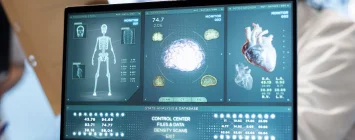
AI-powered insights
From retinal scans to predictive algorithms, we harness AI to detect cardiovascular risks faster and more accurately
AI-powered insights
From retinal scans to predictive algorithms, we harness AI to detect cardiovascular risks faster and more accurately

Next-level testing
We go beyond traditional cholesterol tests with ApoB, Lipoprotein(a), and particle size analysis for a deeper understanding

Next-level testing
We go beyond traditional cholesterol tests with ApoB, Lipoprotein(a), and particle size analysis for a deeper understanding

Inflammation markers
hsCRP and other advanced biomarkers to assess cardiovascular inflammation and residual risk

Inflammation markers
hsCRP and other advanced biomarkers to assess cardiovascular inflammation and residual risk
Continuous cardiac monitoring
We use connected devices to monitor heart health remotely enabling early detection and continuous care

Continuous cardiac monitoring
We use connected devices to monitor heart health remotely enabling early detection and continuous care

Unique workflows
Streamlined, patient-first processes eliminate delays and reduce complexity, bringing diagnostics and treatment to the forefront

Unique workflows
Streamlined, patient-first processes eliminate delays and reduce complexity, bringing diagnostics and treatment to the forefront

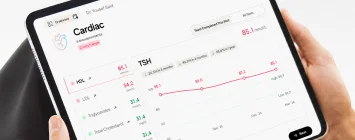
Personalized risk profiles
Every patient receives tailored care based on the most advanced biomarkers and AI-assisted diagnostics
Personalized risk profiles
Every patient receives tailored care based on the most advanced biomarkers and AI-assisted diagnostics
AI-powered insights
From retinal scans to predictive algorithms, we harness AI to detect cardiovascular risks faster and more accurately
Next-level testing
We go beyond traditional cholesterol tests with ApoB, Lipoprotein(a), and particle size analysis for a deeper understanding
Inflammation markers
hsCRP and other advanced biomarkers to assess cardiovascular inflammation and residual risk
Continuous cardiac monitoring
We use connected devices to monitor heart health remotely enabling early detection and continuous care
Unique workflows
Streamlined, patient-first processes eliminate delays and reduce complexity, bringing diagnostics and treatment to the forefront
Personalized risk profiles
Every patient receives tailored care based on the most advanced biomarkers and AI-assisted diagnostics
Meet your cardiology team
Meet your cardiology team




AI-powered retinal scan for cardiovascular risk
AI-powered retinal scan for cardiovascular risk
A non-invasive, AI-assisted retinal scan that detects early signs of cardiovascular disease (CVD) in under a minute.
A non-invasive, AI-assisted retinal scan that detects early signs of cardiovascular disease (CVD) in under a minute.
What it assesses
Retinal vascular patterns linked to CVD risk
Retinal vascular patterns linked to CVD risk
Microvascular damage and arterial stiffness
Microvascular damage and arterial stiffness
Why it matters
Early detection enables timely, preventive intervention
Strong clinical concordance (c-index: 0.71)
Fast, accessible alternative to CT-based diagnostics
Extremely affordable
Early detection enables timely, preventive intervention
Strong clinical concordance (c-index: 0.71)
Fast, accessible alternative to CT-based diagnostics
Extremely affordable
What’s included
Retinal CVD scan
Lipid panel, HbA1c, high-sensitivity CRP
GP consultation including integrated CVD risk assessment
Retinal CVD scan
Lipid panel, HbA1c, high-sensitivity CRP
GP consultation including integrated CVD risk assessment
Self-pay
Self-pay

499
499
(Retinal scan: AED 99 self-pay)
Insurance
Insurance
Covered
Covered
(Retinal scan: AED 99 self-pay)


The single strongest predictor of how long you will live
The single strongest predictor of how long you will live
Uncover your true cardiovascular potential with VO₂ Max testing
At Metabolic, VO₂ Max testing is part of a clinically designed, cardiologist-led fitness assessment program, built to track and improve your health over time, not just at a single moment
Uncover your true cardiovascular potential with VO₂ Max testing
At Metabolic, VO₂ Max testing is part of a clinically designed, cardiologist-led fitness assessment program, built to track and improve your health over time, not just at a single moment
Frequently Asked Questions
Frequently Asked Questions
Can a retinal scan really predict heart disease?

Yes, the blood vessels in your retina are a direct, visible window into your vascular health, since they're affected by the same processes that damage the arteries around your heart. Our AI-assisted retinal scan detects early signs of cardiovascular disease in under a minute, with strong clinical concordance (c-index: 0.71) to CT-based diagnostics without the radiation, cost, or wait time.
Do I need a referral to see a cardiologist in Dubai?

No — you can book directly with a cardiologist without a GP referral. If your insurance plan requires one for coverage purposes, our team will confirm that and help arrange it before your visit.
At what age should I start getting my heart checked?
As a general guideline, once you hit 40, a cardiac risk assessment is worth doing at least once a year — even if you feel completely fine. If you have high blood pressure, diabetes, high cholesterol, or a family history of heart disease, it's worth starting earlier.
Is a cardiac screening covered by insurance?
In most cases, yes. Our AI-powered retinal scan, lipid panel, and consultation are typically covered under corporate insurance plans, with self-pay pricing available if you're not covered. We'll confirm your exact coverage before your visit.
What's the difference between an ECG, an echocardiogram, and a stress test?
An ECG measures your heart's electrical activity at rest. An echocardiogram uses ultrasound to look at your heart's structure and how well it's pumping. A stress test checks how your heart performs under physical exertion — useful for catching issues that don't show up while you're resting. Depending on your symptoms and risk factors, your cardiologist may recommend one or more of these.
Can a retinal scan really predict heart disease?
Yes, the blood vessels in your retina are a direct, visible window into your vascular health, since they're affected by the same processes that damage the arteries around your heart. Our AI-assisted retinal scan detects early signs of cardiovascular disease in under a minute, with strong clinical concordance (c-index: 0.71) to CT-based diagnostics without the radiation, cost, or wait time.
Do I need a referral to see a cardiologist in Dubai?
No — you can book directly with a cardiologist without a GP referral. If your insurance plan requires one for coverage purposes, our team will confirm that and help arrange it before your visit.
At what age should I start getting my heart checked?
As a general guideline, once you hit 40, a cardiac risk assessment is worth doing at least once a year — even if you feel completely fine. If you have high blood pressure, diabetes, high cholesterol, or a family history of heart disease, it's worth starting earlier.
Is a cardiac screening covered by insurance?
In most cases, yes. Our AI-powered retinal scan, lipid panel, and consultation are typically covered under corporate insurance plans, with self-pay pricing available if you're not covered. We'll confirm your exact coverage before your visit.
What's the difference between an ECG, an echocardiogram, and a stress test?
An ECG measures your heart's electrical activity at rest. An echocardiogram uses ultrasound to look at your heart's structure and how well it's pumping. A stress test checks how your heart performs under physical exertion — useful for catching issues that don't show up while you're resting. Depending on your symptoms and risk factors, your cardiologist may recommend one or more of these.


Locations
Locations
Locations
UAE
UK (coming soon)
1 Knightsbridge, Unit A, London SW1X 7LX
1 Knightsbridge, Unit A SW1X 7LX London
USA (coming soon)
2480 S. Sepulveda Boulevard,
Los Angeles, CA 90064
2480 S. Sepulveda Boulevard, Los Angeles, CA 90064
Contact Details
Contact Details
Contact Details
Newsletter
Newsletter
Newsletter
Subscribe to receive marketing updates. Opt out anytime. See our Privacy Policy.
Subscribe to receive marketing updates. Opt out anytime. See our Privacy Policy.


GluCare Integrated Diabetes Center L.L.C. (Trading as Metabolic) | Copyright © Metabolic Health. All Rights Reserved. | MOHAP License Number: MAW5UUEI-201025
GluCare Integrated Diabetes Center L.L.C. (Trading as Metabolic) | Copyright © Metabolic Health. All Rights Reserved. | MOHAP License Number: MAW5UUEI-201025
GluCare Integrated Diabetes Center L.L.C. (Trading as Metabolic) | Copyright © Metabolic Health. All Rights Reserved. | MOHAP License Number: MAW5UUEI-201025
